
-
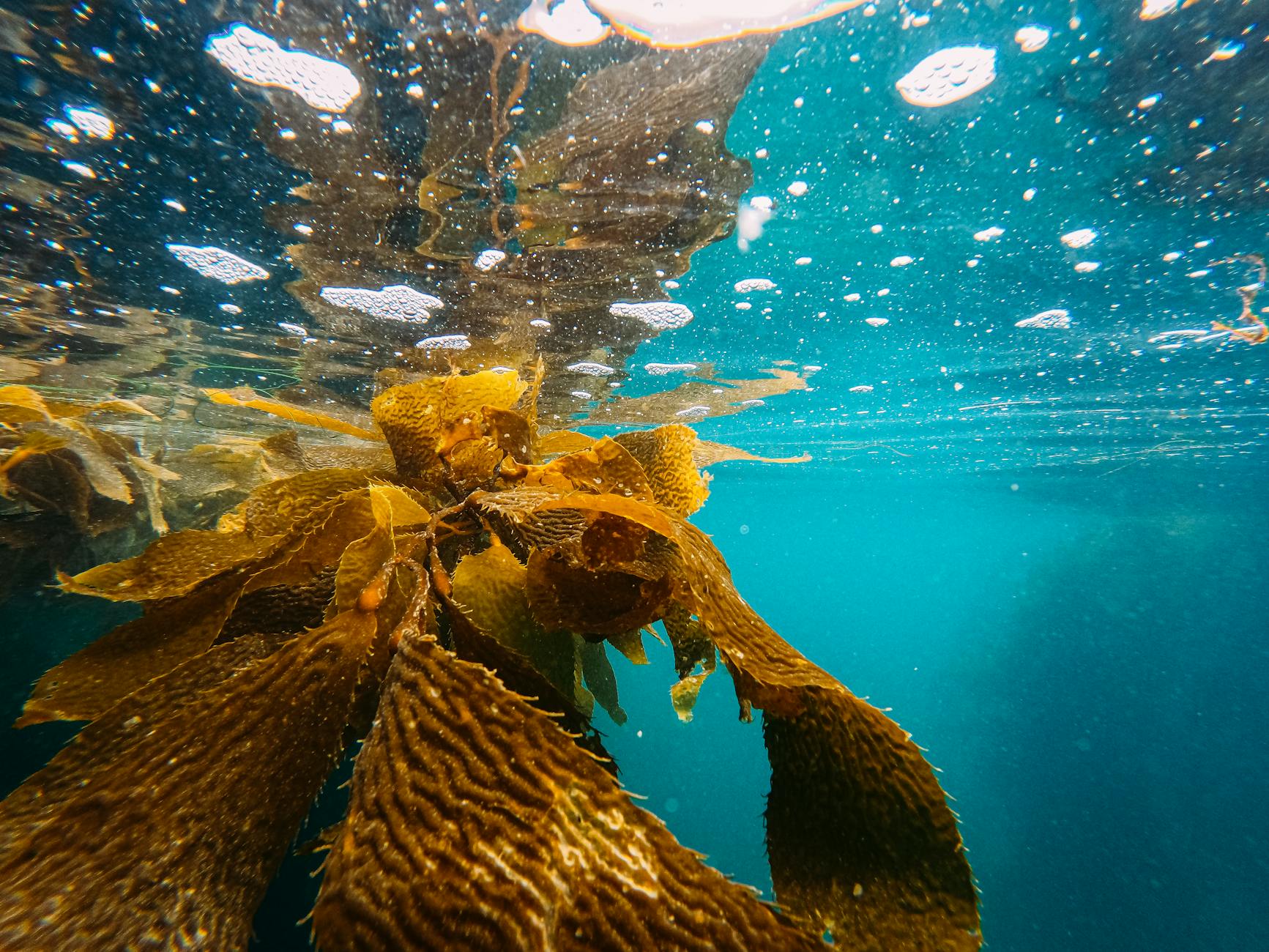
AICE Marine Science AS Chapter 4 Classification and Biodiversity Day 5
The lesson plan focuses on enhancing AICE Marine Science exam pass rates by teaching macroalgae and marine plants effectively. It includes objectives, materials, a lesson outline, and strategies such as using engaging videos and small group activities. The post emphasizes the ecological and economic importance of these marine organisms to create a dynamic learning environment.
-

AICE Marine Science AS Chapter 4 Classification and Biodiversity Day 4
The lesson plan for Chapter 4 of AICE Marine Science focuses on key objectives such as identifying marine organisms, understanding the importance of fish species, and studying chordates. Using engaging strategies like videos and group activities, instructors can enhance student learning and performance on the AICE Marine Science Exam. Homework involves copying notes for deeper…
-
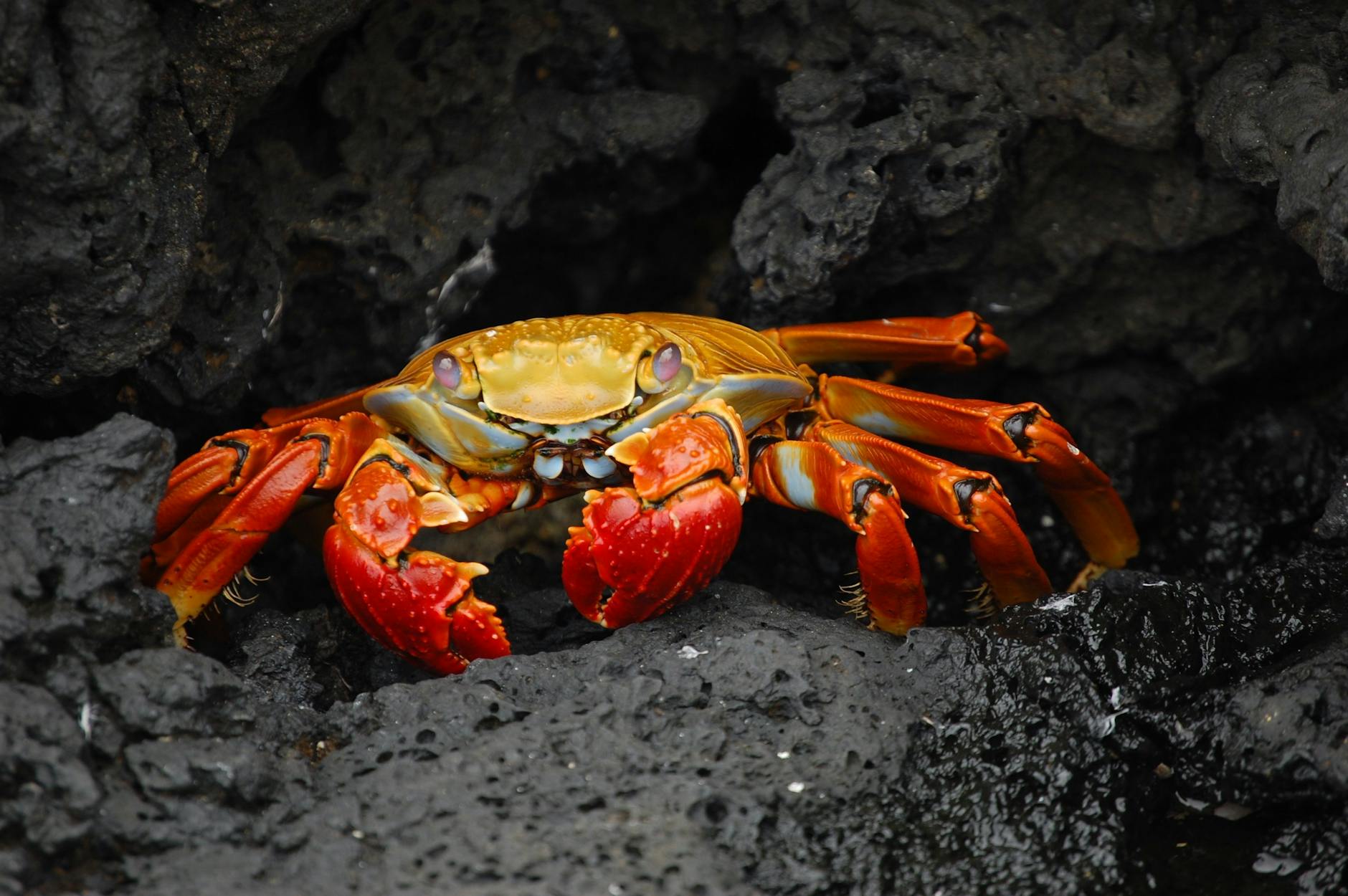
AICE Marine Science AS Chapter 4 Classification and Biodiversity Day 3
This post explores effective teaching strategies for AICE Marine Science, focusing on crustaceans. It covers key objectives, materials, lesson outline, and homework tasks. The lesson plan includes engaging hooks, detailed instruction, small group activities, and exit ticket ideas to create a dynamic learning environment and improve students’ success rates.
-
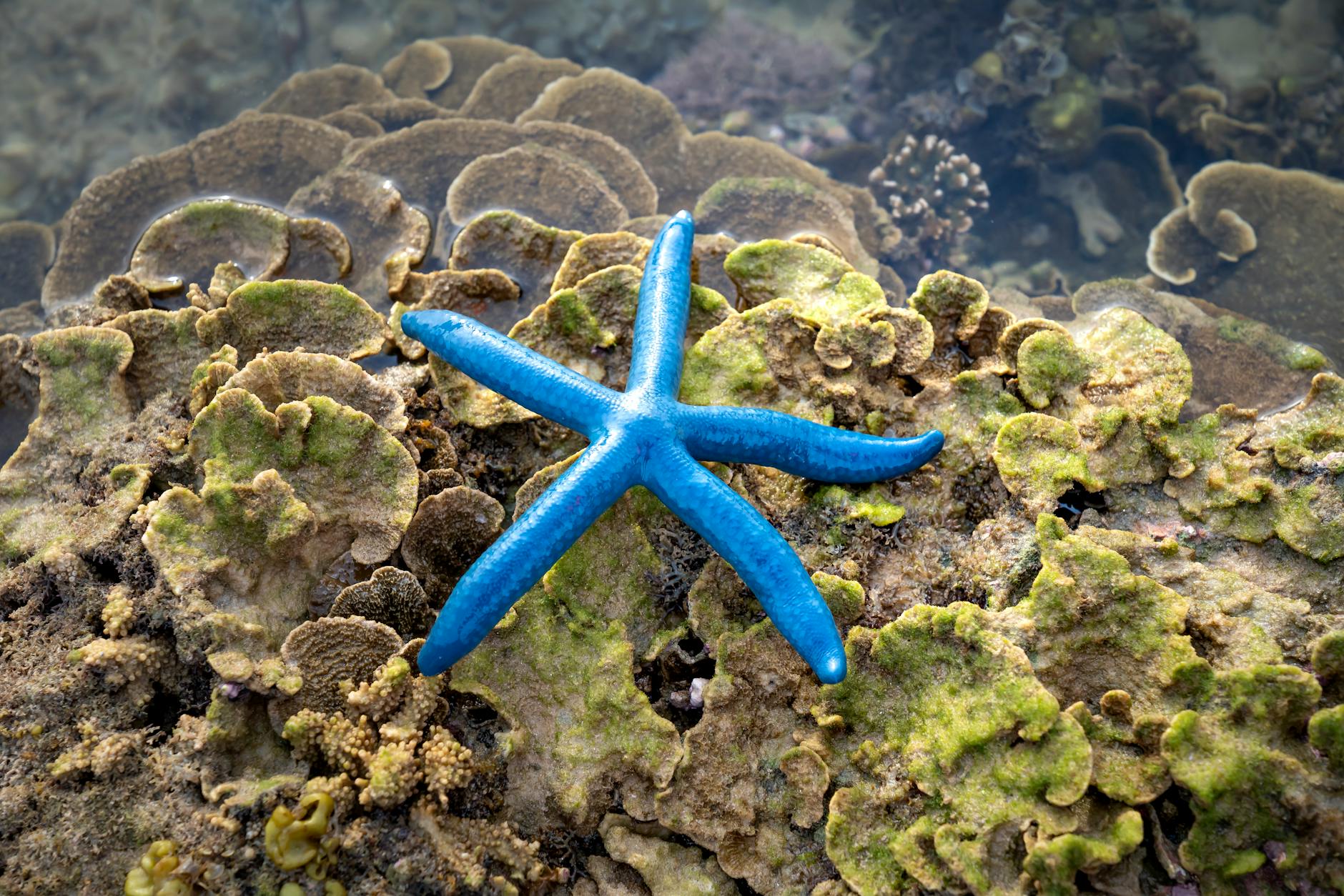
AICE Marine Science AS Chapter 4 Classification and Biodiversity Day 2
This blog post focuses on improving AICE Marine Science exam success by effectively teaching plankton and echinoderms. It highlights teaching strategies for understanding phytoplankton, zooplankton, adult echinoderm features, and their ecological and economic importance. Incorporating engaging hooks, visual aids, and hands-on activities is essential for student success.
-

AICE Marine Science AS Chapter 4 Classification and Biodiversity Day 1
This post focuses on strategies for teaching taxonomy and classification in AICE Marine Science, emphasizing the importance of accessible and engaging lesson plans. It outlines objectives, materials, lesson outline, and homework tasks, aiming to boost student confidence and performance in exams while fostering an appreciation for marine life diversity and organization.
-

AICE Marine Science AS Chapter 1 Water Day 7
The importance of using AICE style questions for review in Marine Science cannot be overstated. By familiarizing students with exam formats, targeting key content, and promoting higher-order thinking, teachers can significantly enhance student success. Customized questions, immediate feedback, and student engagement further amplify the benefits. Integrating these questions into teaching practices is an invaluable strategy.
-
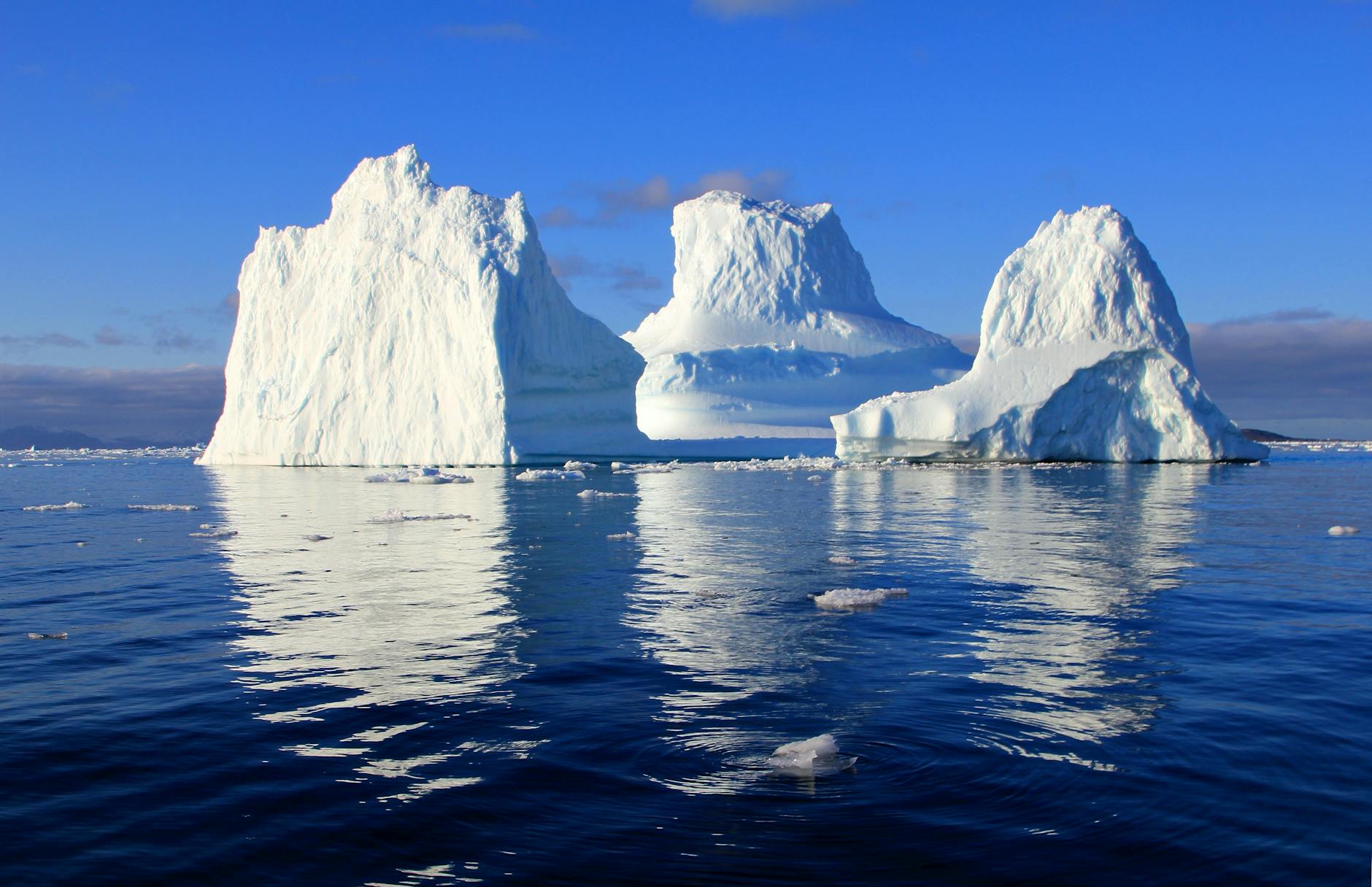
AICE Marine Science AS Chapter 1 Water Day 5
The lesson plan for AICE Marine Science teachers focuses on explaining seawater density and ocean layering. It covers factors affecting density, ocean layer formation, and their implications. Key concepts like thermocline, halocline, and pycnocline are introduced. The lesson includes hands-on experiments, math activities, and homework to reinforce learning.
-

AICE Marine Science AS Chapter 1 Water Day 4
Chapter 1 Water Day #4. Lesson plan As AICE Marine Science teachers, one of our
-
AICE Marine Science AS Chapter 1 Water Day 3
In AICE Marine Science, understanding the pH scale and gas solubility in water is crucial for comprehending marine processes and impacts on organisms. Through lectures, practical activities, and real-world examples, students gain insight into the delicate balance of marine ecosystems. Hands-on experiments and transcribing notes enhance their understanding and preparation for exams.
-
AICE Marine Science AS Chapter 1 Water Day 2
This blog post delves into marine science concepts like solubility in seawater and the factors affecting salinity. It aims to familiarize students with terms like solute, solvent, and solution, as well as the impact of temperature, run-off, precipitation, and evaporation on sea water salinity.
-

AICE Marine Science AS Chapter 1 Water Day 1
This marine science lesson focuses on the fundamental properties of water. It covers water’s structure, changes of state, and bonding, emphasizing its role in marine ecosystems. The lesson includes lectures, group activities, and homework to deepen students’ understanding in preparation for AICE Marine Science topics.
-

AICE Marine Science AS Practical Skills Day 11
On day #10, assessing students with Cambridge style questions tailors instruction, provides feedback, and helps meet educational standards.
-
Mastering Spearman’s Rank Correlation in Marine Science: Analyzing Variable Relationships
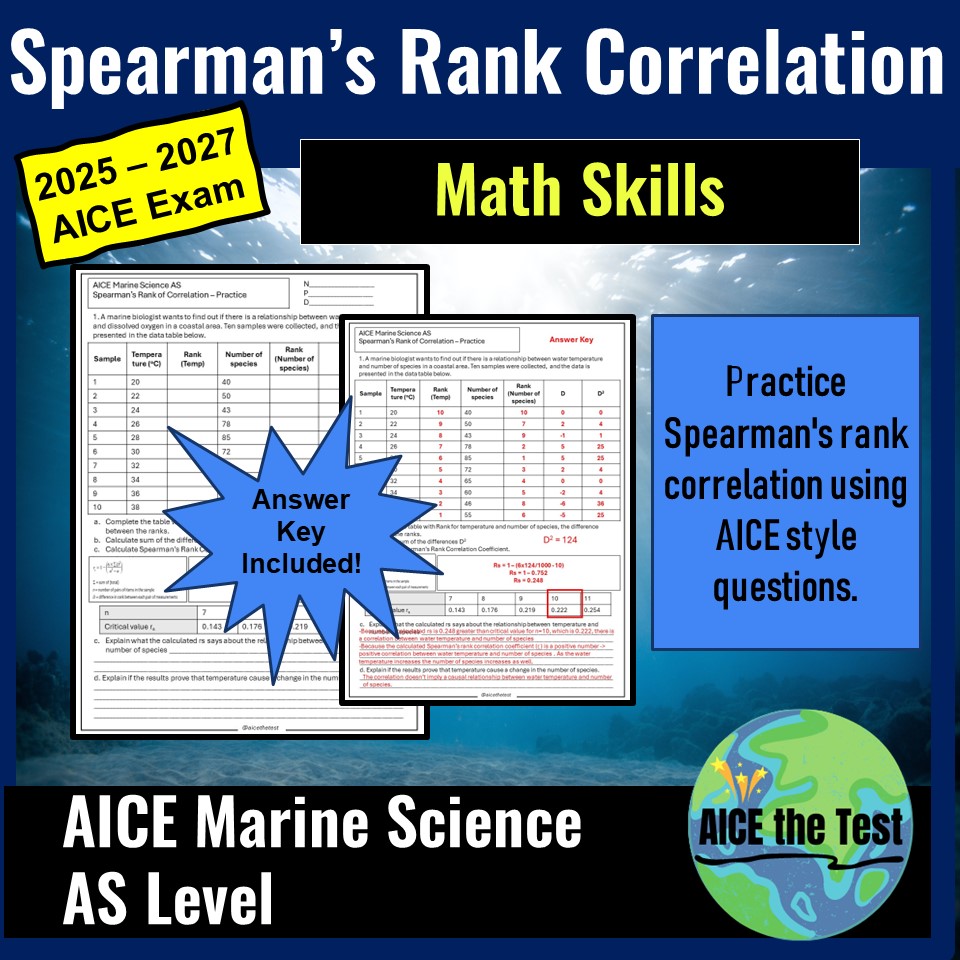
This lesson plan focuses on teaching high school students Spearman’s Rank Correlation to analyze marine science data, enhancing their understanding of marine ecosystems through collaborative activities.
-

AICE Marine Science AS Practical Skills Day 7
Marine ecosystems are rich and complex, and Simpson’s Index of Diversity helps quantify and interpret their biodiversity, informing conservation strategies.
-

AICE Marine Science AS Practical Skills Day 6
This blog post discusses essential marine science sampling techniques such as mark-release-recapture and random sampling using a quadrat, including their limitations. It also covers concepts like random versus systematic sampling and provides real-world examples. Practical activities and homework are included to further enhance student understanding and engagement in ecological research.
-
AICE Marine Science AS Practical Skills Day 5
The lesson plan for Day #5 aims to teach students about the impact of ocean acidification on marine organisms. Using hands-on experimentation and theoretical knowledge, students will observe and measure the effects of increased acidity on shells over several class periods. The objective is to practice controlled experiments, data collection, analysis, and drawing conclusions.
-

0.3 Evaluation of procedures and data 0.4 Analysis of data and making conclusions
The content outlines a lesson plan covering the identification of systematic and random errors in experiments, ways to improve experiments, proper data analysis and calculations, interpreting patterns and trends in data, drawing conclusions, and a practical activity for students to analyze marine data. It also includes an exit ticket and homework assignment focused on note-taking.
-

0.2 Presentation of data and observations
The lesson plan for day 3 covers data presentation at the Cambridge level, including rules for graphing data using line graphs, bar graphs, or histograms. Students engage in small group activities to create and analyze graphs, with the homework task focused on transcribing notes from the lecture presentation.
-

0.1 Steps of experimental design
In this marine science lesson plan, students learn to conduct precise experiments through controlling key variables and using the correct equipment for measurements. The lesson covers techniques for maintaining variable control and includes group activities to design experiments. Homework involves transcribing notes for active engagement during class time.
-

AICE Marine Science AS Day 1: Introduction to Practical Skills
Day # 1. Lesson plan Objectives Materials Lesson 3. Use Student Guided Notes – This year, I’m

AICE Marine Science AS
Categorise
- 1. Introduction to Environmental Management
- 2. Environmental Research and Data Collection
- 3. Managing Human Population
- 4. Managing Ecosystems and Biodiversity
- 5. Managing Resources
- 6. Managing Water Supplies
- 7. Managing the Atmosphere
- 8. Managing Climate Change
- AICE Environmental Exam Prep
- AICE Environmental Management
- AICE Marine Exam Preparation
- AICE Marine Science AS
- Chapter 0 Practical Skills
- Chapter 1 Water
- Chapter 2 Earth Processes
- Chapter 3 Interactions in Marine Ecosystems
- Chapter 4 Classification and Biodiversity
- Chapter 5 Examples of Marine Ecosystems
Recent Posts
- AICE Marine Science AS Chapter 4 Classification and Biodiversity Day 5

- AICE Marine Science AS Chapter 4 Classification and Biodiversity Day 4

- AICE Marine Science AS Chapter 4 Classification and Biodiversity Day 3

- AICE Marine Science AS Chapter 4 Classification and Biodiversity Day 2

- AICE Marine Science AS Chapter 4 Classification and Biodiversity Day 1

