
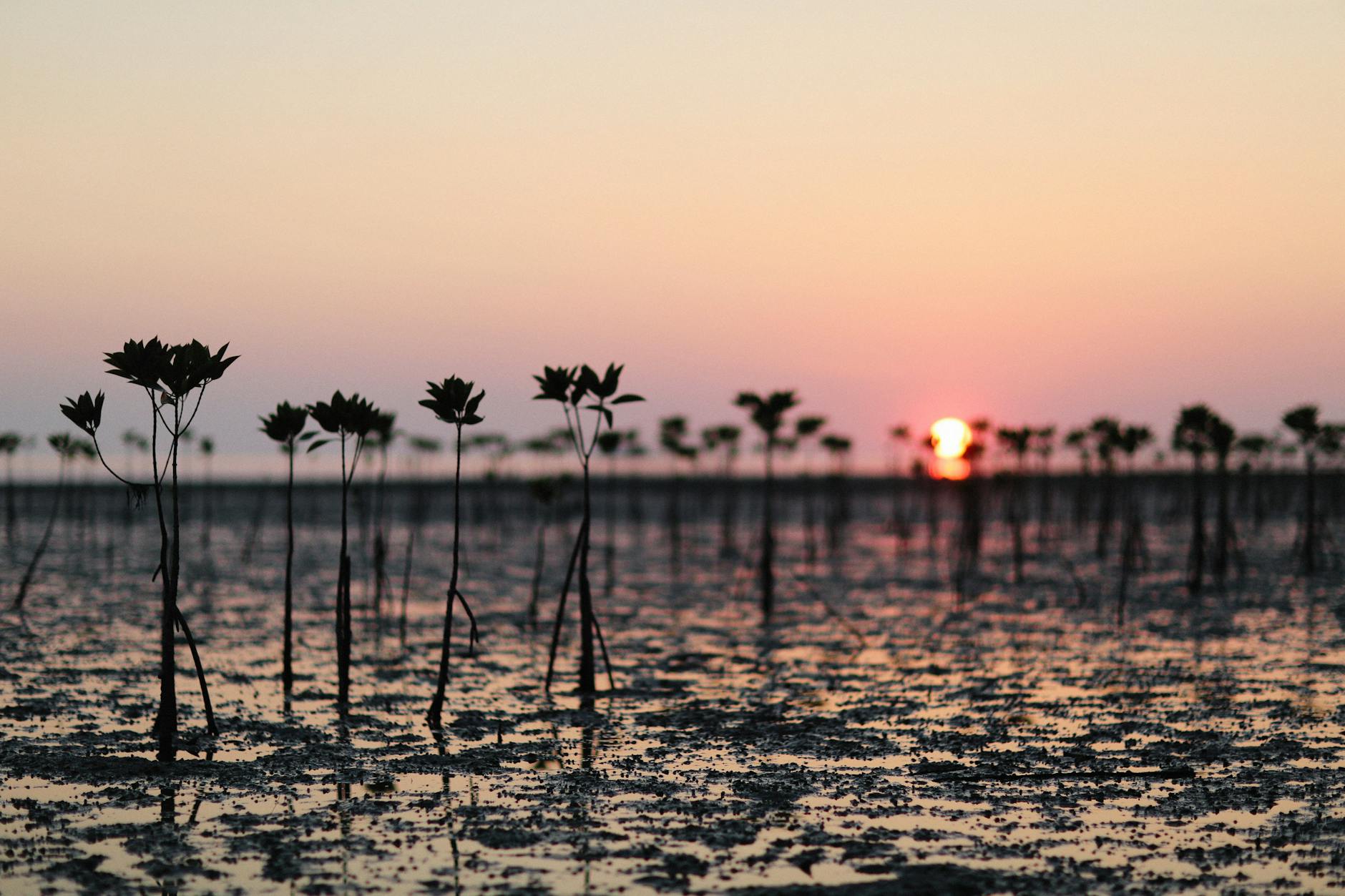

Chapter 5 Examples of marine ecosystems Day#7. Lesson plan
Effective Strategies for Teaching Mangrove Forests in AICE Marine Science: Boost Exam Success
As an AICE Marine Science teacher, you play a crucial role in helping your students understand the complexities of marine ecosystems. One vital topic is mangrove forests, their formation, ecological importance, and the threats they face. By incorporating engaging teaching strategies, you can enhance your students’ grasp of these concepts and improve their exam performance. This blog post outlines effective methods for teaching these objectives.
Objectives
- 5.5 The mangrove forest
- outline the conditions required for the formation of mangrove forest
- explain how the red mangrove tree, Rhizophora mangle, is adapted to the mangrove environment
- explain the ecological importance of mangrove forests
- discuss the importance of mangrove forests
- discuss the threats to mangrove forests
Vocabulary
- Propagule: a reproductive structure that detaches from the parent plant and is able to grow into a new individual
- Lenticel: a raised pore in the roots of a mangrove that allows gas exchange between the atmosphere and the internal tissues
- Viviparous reproduction: a reproductive strategy where the seed develops into a young plant while still attached to the parent plant
Bellringer
- Bellringer#7
- Alternative: Compare and contrast rocky shores and sandy shores.
Lesson Outline
Hook
- Begin your lesson with an intriguing question: “What coastal ecosystem can protect shorelines, provide habitats for diverse species, and help combat climate change?” Show a short, captivating video or images of mangrove forests and ask students to guess the ecosystem. This hook will pique their curiosity and set the stage for an in-depth exploration of mangrove forests.
Conservation International
Instruction
- Lecture/Notes
- Objective 1: Outline the conditions required for the formation of mangrove forest
- Tropical and Subtropical Regions: Mangrove forests are typically found in warm, coastal areas between the latitudes of 25°N and 25°S.
- Intertidal Zones: Mangroves thrive in areas where seawater meets freshwater, such as estuaries and coastal lagoons.
- Sediment-Rich Environments: Mangroves require muddy, nutrient-rich soils to anchor their roots and support their growth.
- Saltwater Tolerance: Mangrove species have adaptations that allow them to survive in saline environments.
- Objective 2: explain how the red mangrove tree, Rhizophora mangle, is adapted to the mangrove environment
- Prop Roots: Provide stability in soft, muddy soils and help with gas exchange.
- Salt Excretion: Specialized glands on leaves excrete excess salt.
- Pneumatophores: Aerial roots that facilitate gas exchange in oxygen-poor sediments.
- Viviparous Seeds: Seeds germinate while still attached to the parent tree, increasing survival chances in a dynamic environment.
- Objective 3: explain the ecological importance of mangrove forests
- Habitat Provision: Mangroves provide crucial habitats for a wide range of marine and terrestrial species.
- Nursery Grounds: Many fish and invertebrates use mangroves as nursery areas, where juveniles can grow and find protection from predators.
- Carbon Sequestration: Mangroves store large amounts of carbon, helping mitigate climate change.
- Coastal Protection: Their root systems stabilize shorelines, reducing erosion and buffering against storm surges and tsunamis.
- Objective 4: discuss the importance of mangrove forests
- Biodiversity: Support diverse flora and fauna.
- Economic Value: Provide resources like timber, fish, and tourism opportunities.
- Objective 5: discuss the threats to mangrove forests
- Deforestation: Clearing for agriculture, aquaculture, and urban development.
- Pollution: Oil spills, plastic waste, and chemical run-off.
- Climate Change: Rising sea levels and increased storm intensity.
- Objective 1: Outline the conditions required for the formation of mangrove forest
Bloomberg Originals


- Individual activity
- Have students create their own models of red mangrove trees using craft materials. This hands-on approach reinforces their understanding of the tree’s adaptations.
- Small group activity
- Exam Style Questions 6-9 page 180 – 181 (Coursebook)
- Exit ticket
- If you opt to have students complete their notes using the Student Guided Notes format during your lecture, then use the bellringer as the exit ticket activity in class.
- If you opt to have students complete their notes using the Student Guided Notes format at home (homework), then use the following exit ticket activity:
- Have students share the answers to exam style questions.
By incorporating these strategies into your teaching, you can help your students master the complex topics of mangrove forests, their importance, and the threats they face. Engaging activities, detailed explanations, and real-world examples will make these concepts more accessible and enjoyable, ultimately leading to higher passing rates in AICE Marine Science exams.
Investing time in these approaches will not only prepare your students for their exams but also foster a deeper appreciation for the critical role mangrove forests play in marine ecosystems. With a focused and dynamic teaching method, you’ll be well-equipped to guide your students towards success in their AICE Marine Science journey.
Homework
- Review all topics covered on this chapter.
More lessons…


