

Chapter 4 Classification and Biodiversity Day#2. Lesson plan
Boost AICE Marine Science Exam Success: Teaching Plankton and Echinoderms Effectively
Improving your students’ passing rates on the AICE Marine Science exam requires effective teaching strategies that engage and clarify complex topics. This blog post will focus on enhancing your teaching methods for three key objectives: describing and explaining the role of phytoplankton and zooplankton, stating the main features of a typical adult echinoderm, and understanding the ecological and economic importance of echinoderms. Incorporating a strong lesson hook and engaging activities can make these concepts more accessible and enjoyable for your students.
Objectives
- 4.2 Key groups of marine organisms
- describe and explain the role of phytoplankton and zooplankton
- state the main features of a typical adult echinoderm
- understand the ecological and economic importance of echinoderms
Vocabulary
- Plankton: microscopic free floating marine organisms
- Zooplankton: planktonic consumers that are either floating or weakly swimming
animals - Echinoderms: a marine invertebrate group with pentaradial symmetry and tube fee
Bellringer
- Bellringer#1
- Alternative: List the levels of organization from the most inclusive to the least inclusive.
Lesson Outline
Hook
- Start your lesson with an engaging hook: “The Invisible Powerhouses of the Ocean.” Show a captivating video or high-resolution images of plankton under a microscope, revealing their fascinating structures and movements. Explain that despite their tiny size, these organisms play a massive role in the ocean’s ecosystems and even influence global processes. This visual and intriguing introduction will grab your students’ attention and set the stage for deeper exploration. Check out the beautiful video below – Credit: TED-Ed
Instruction
- Lecture/Notes
- Describe and explain the role of phytoplankton and zooplankton
- Phytoplankton: Microscopic, photosynthetic organisms that form the base of the marine food web. They produce oxygen and serve as the primary producers in ocean ecosystems.
- Zooplankton: Heterotrophic plankton that feed on phytoplankton and other small particles. They are crucial for transferring energy up the food chain.
- Discuss real-world phenomena such as algal blooms, explaining how phytoplankton can impact marine environments both positively and negatively.
- Describe the main features of a typical adult echinoderm.
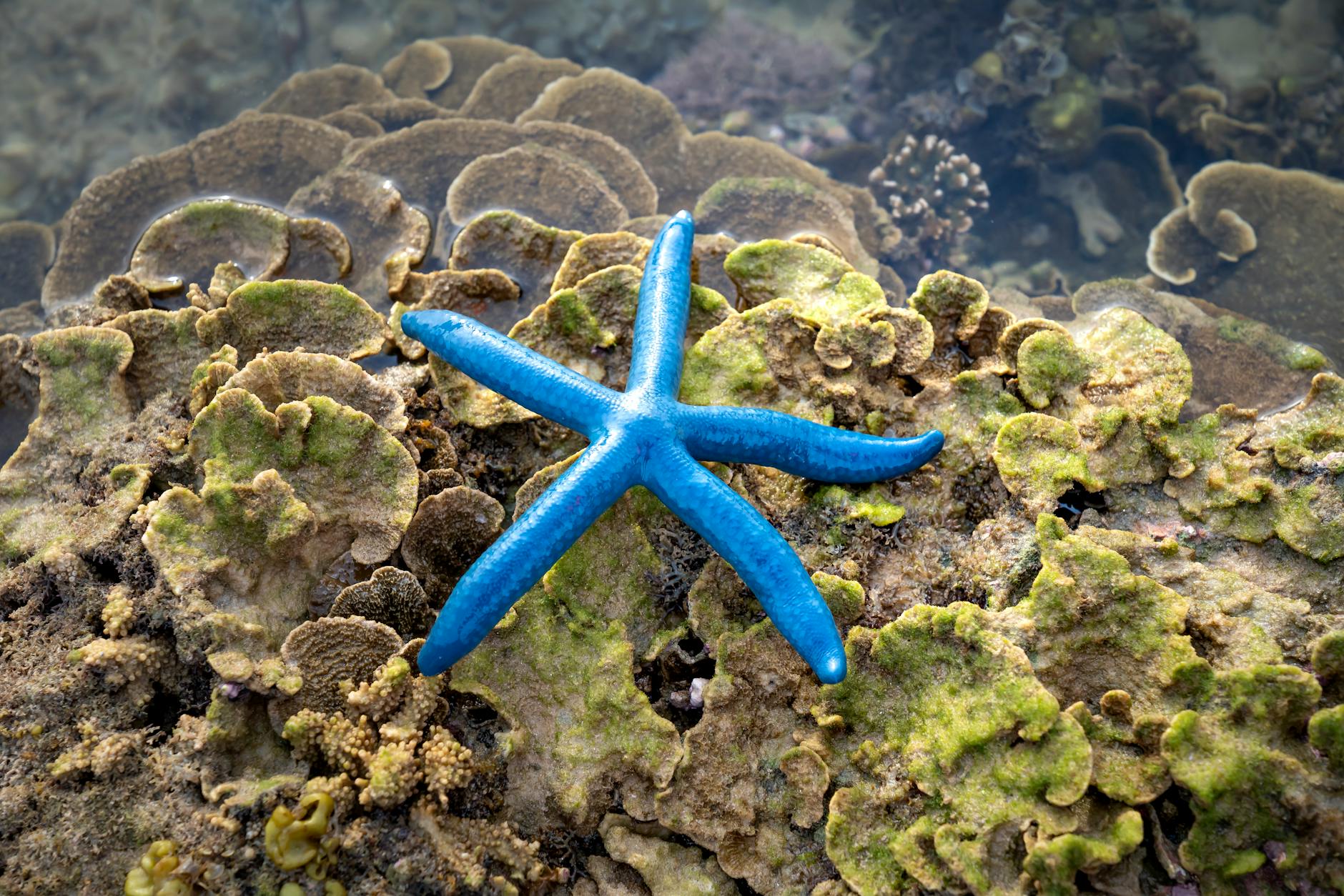
- Echinoderms: Marine invertebrates characterized by radial symmetry, a water vascular system, and a calcareous endoskeleton. Examples include sea stars, sea urchins, and sea cucumbers.
- If possible, bring in preserved specimens or 3D models of echinoderms for students to examine. Highlight key features such as the tube feet, spines, and radial symmetry.
- Show videos of echinoderms in their natural habitats, demonstrating their movement, feeding, and reproductive behaviors. Check out the beautiful video below-Credit: Natural World Facts
- Describe and explain the role of phytoplankton and zooplankton
- Describe the ecological and economic importance of echinoderms.
- Ecological Importance: Echinoderms play vital roles in marine ecosystems, such as bioerosion, nutrient cycling, and as keystone species maintaining the balance of marine habitats.
- Economic Importance: Echinoderms contribute to fisheries, aquaculture, and are harvested for food, traditional medicine, and scientific research.


- Small group activity
- Students research and present on the ecological and economic importance of specific echinoderm species. Encourage them to use multimedia elements like videos, infographics, and interactive presentations.
- Exit ticket
- If you opt to have students complete their notes using the Student Guided Notes format during your lecture, then use the bellringer as the exit ticket activity in class.
- If you opt to have students complete their notes using the Student Guided Notes format at home (homework), then use the following exit ticket activity:
- Have students resent the findings of the research.
By incorporating these strategies into your teaching, you can help your students better understand the roles of phytoplankton, zooplankton, and echinoderms, which are crucial for their success in the AICE Marine Science exams. Engaging lesson hooks, visual aids, hands-on activities, and real-world examples will make these complex topics more accessible and enjoyable. With a focused and dynamic approach, you’ll be well-equipped to guide your students towards higher passing rates and a deeper appreciation for marine science.
Homework
- The sole homework task assigned to my students revolves around meticulously transcribing notes in the Student Guided Notes format. They meticulously replicate content by hand from the Lecture/Notes (PPT – slides 17 -20) presentation.
- This approach ensures that during class time, while I continue to deliver lectures and expound on topics, students have their notes already compiled. Consequently, they can actively engage, ask questions, and delve deeper into understanding rather than merely being preoccupied with note-taking. This strategy efficiently liberates valuable class time, allowing for engaging activities and practice Cambridge style questions.
More lessons…


