

7. Managing the Atmosphere Day#1. Lesson plan
Boost Your AICE Environmental Management Exam Success: Strategies for Teaching Acid Deposition
Teaching AICE Environmental Management can be a rewarding experience, especially when you see your students excel in their exams. One critical topic that often poses challenges is acid deposition. To help you improve your teaching methods and boost your students’ exam success rates, we’ve put together a comprehensive guide on acid deposition. This includes defining acid deposition, describing its types, outlining its formation, and discussing its impacts on various environments.
Objectives
- 7.1 Acid deposition
- define acid deposition
- describe the two types of acid deposition
- outline the formation of acid deposition
- outline the impacts of acid deposition on: aquatic environments, vegetation and crops, stone and brick buildings
Materials
- Lecture/Notes (PPT – slides 1-11)
- Student Guided Notes
- “Environmental Management in Context: Air quality index and real time air pollution monitoring” – page 274-275 (Coursebook)
- 7.1 Questions 1-3 page 282 (Coursebook)
Vocabulary
- Acid deposition: a mix of air pollutants that deposit from the atmosphere as acidic wet deposition (with a pH<5.6) or acidic dry deposition.
- Primary air pollutant: an air pollutant emitted directly from the source.
- Secondary air pollutant: an air pollutant that forms when pollutants react in the atmosphere.
Bellringer
- Bellringer#1
- Alternative: What do you know about causes and effects of air pollution?
Lesson Outline
Hook
- Students read “Environmental Management in Context: Air quality index and real time air pollution monitoring” – page 274-275 (Coursebook)
- Discuss questions 1-4.
Instruction
- Lecture/Notes
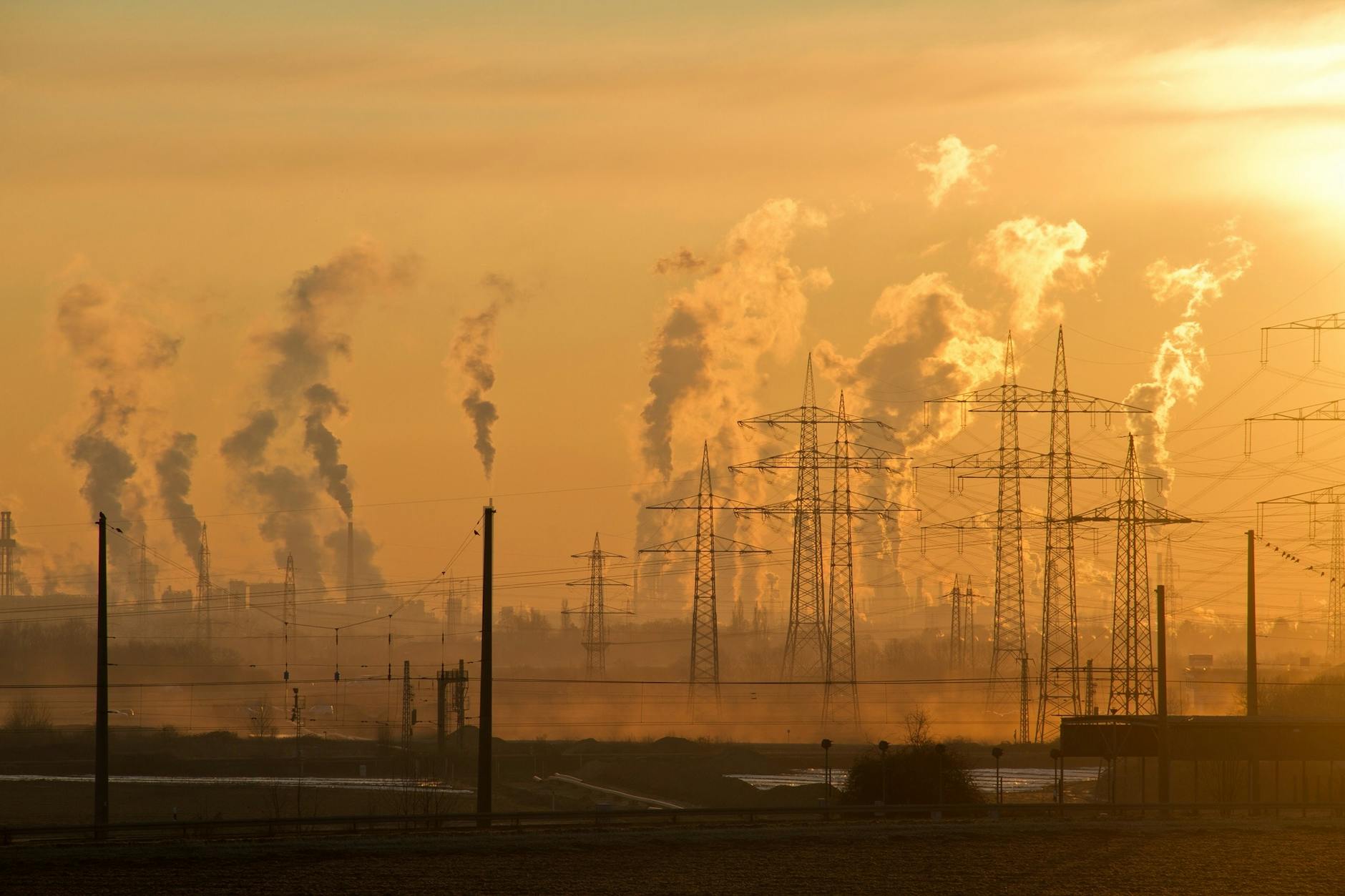
- Acid deposition refers to the deposit of acidic components in either wet or dry forms from the atmosphere onto the Earth’s surface. It occurs when sulfur dioxide (SO₂) and nitrogen oxides (NOx) are emitted into the atmosphere, where they react with water vapor and other chemicals to form acidic compounds.
- Discuss the difference between wet deposition and dry deposition;
- Discuss the formation of acid deposition steps:
- Sulfur dioxide (SO₂) and nitrogen oxides (NOx) are released into the atmosphere from sources like fossil fuel combustion, industrial processes, and vehicle emissions.
- In the atmosphere, these gases react with water vapor, oxygen, and other chemicals to form sulfuric acid (H₂SO₄) and nitric acid (HNO₃).
- The acidic compounds are deposited onto the Earth’s surface through wet or dry deposition processes, affecting various environmental components.
- Explain the impacts of acid deposition:
- On aquatic environments:
- Acidic waters can lead to the leaching of toxic metals like aluminum from soil into water bodies, harming aquatic life.
- Fish and other aquatic organisms may experience reproductive issues, reduced growth, and increased mortality rates.
- On vegetation and crops:
- Acid deposition can damage the leaves and bark of trees, impairing photosynthesis and reducing growth.
- Crops exposed to acid rain may have reduced yields and quality, impacting food production and agricultural sustainability.
- On stone and brick buildings:
- Acidic precipitation accelerates the weathering of stone and brick materials, leading to structural damage and increased maintenance costs.
- Historic monuments and buildings are particularly vulnerable, as the acid can erode intricate details and inscriptions.
- On aquatic environments:


- Hands-on activity
- Students work in small groups and perform the activity following the steps listed in the coursebook.
- At the end of the activity, when all groups are done, have a class discussion using the questions listed in the coursebook.
- Exit ticket
- If you opt to have students complete their notes using the Student Guided Notes format during your lecture, then use the bellringer as the exit ticket activity in class.
- If you opt to have students complete their notes using the Student Guided Notes format at home (homework), then use the following exit ticket activity:
- 7.1 Questions 1-3 page 282 (Coursebook)
By incorporating these strategies into your teaching methods, you can help your students gain a deeper understanding of acid deposition, leading to improved performance on their AICE Environmental Management exams. Remember to engage your students with hands-on activities, clear explanations, and real-world examples to make complex concepts more accessible and memorable.
Happy teaching, and here’s to higher exam passing rates!
Homework
- The sole homework task assigned to my students revolves around meticulously transcribing notes in the Student Guided Notes format. They meticulously replicate content by hand from the Lecture/Notes (PPT – slides 12-17) presentation.
- This approach ensures that during class time, while I continue to deliver lectures and expound on topics, students have their notes already compiled. Consequently, they can actively engage, ask questions, and delve deeper into understanding rather than merely being preoccupied with note-taking. This strategy efficiently liberates valuable class time, allowing for engaging activities and practice Cambridge style questions.


By following these strategies, you can make the topic of acid deposition more engaging and comprehensible for your students, ultimately helping them succeed in their AICE Environmental Management exams.
More lessons…


